



Quzhou Hongkang Paper Products Co., Ltd. is a professional manufacturer engaged in the research, development, production, sale and service of paper cup, ice cream cup, soup container, food tray and PS, PET, paper lid. We have more than 100 self-developed designs and molds for you to choose from. We release at least 10 new products monthly to meet the latest market trends.
Paper Cup Size and Shape
Our recyclable paper cups are available in various sizes to carry practically anything. For our personalized wholesale disposable paper cups, we provide a range of patterns, sizes, and forms.
Customization Logo
With the help of our skilled product production team, we can create custom packaging for your company. Imprint your brand on the paper cups to advertise your company.
Design and Printing
We offer your business a variety of designs, whether ready-made stock print designs or products with bespoke printing, thanks to our first-rate design and printing service.
Sustainable Materials
We create, manufacture, and offer a wide selection of environmentally friendly food packaging choices that lessen customer reliance on petroleum-based packaging.






Introduction of Soup Container
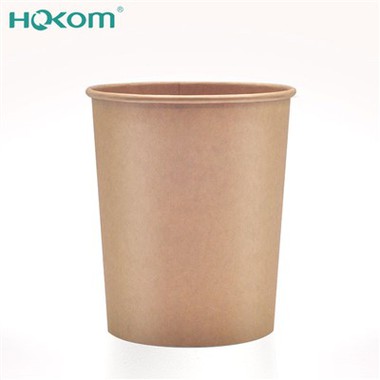
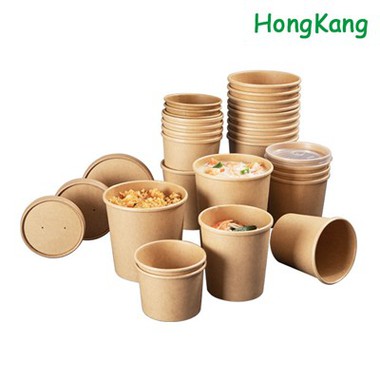
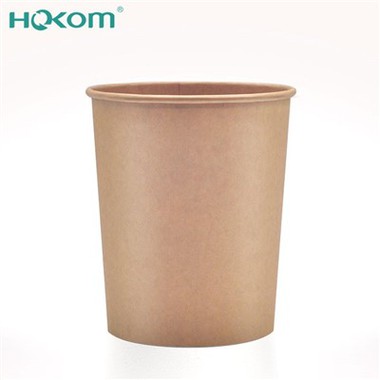
Disposable paper soup cup is very popular in catering supply industry. They are made of high quality thick craft paper, which meets the standard of food safety, are perfect replacement for the plastic cups.
Step 1: Submit A Quote Request
The process for custom soup container development begins with a quote request. You can submit a quote request telling us what you’re looking to have produced and we can then provide you with a quote on how much your custom product order would cost.
Step 2: Send Over Your Design
If the quote looks good to you, the next step will be sending us the custom design you want added to your custom disposables. Ideally, your design will be in an Adobe Illustrator (.ai) or encapsulated postscript (.eps) format, but we can help you convert the file for free if it isn’t. If you don’t have a design created, we can help you create a design at no cost!
Step 3: Review The Proof
Once we have your custom design, we’ll then create a proof for you to review so that you can see what your design will look like on your new custom soup containers. If you approve of the proof, we’ll then send you an invoice before beginning production.
Step 4: Production & Delivery
Once your invoice is paid, we’ll begin production. We’ll deliver your custom soup container straight to you after production. If you don’t have the storage for your whole order, we can store a portion of your order for you until you need it.
Different Types of Soup Container Packaging
Canned Soup Enclosures
The packaging for canned soup is a paradigm of traditional efficacy, predominantly featuring a robust metallic can, adept in preserving both the flavor and the quality of the soup. These containers are typically cylindrical, adorned with a metallic finish, and are equipped with either a ring-pull mechanism or necessitate the use of a can opener. Their superior barrier properties against air and light render them ideal for extensive storage durations.
Elevated Glass Packaging
Glass packaging imparts an air of sophistication and a premium aesthetic to soup packaging. Utilizing transparent glass jars or containers, it allows consumers an unobstructed view of the product, a feature particularly favored by high-end or artisanal soup brands. The inert nature of glass ensures no compromise in the soup’s flavor or quality. However, the primary challenges with glass lie in its substantial weight and fragility, demanding meticulous handling and potentially inflating shipping expenditures.
Artisanal Mason Jars
Mason jars, a specialized category within glass packaging, present a chic and multifaceted option. Characteristically, they come with a screw-top lid, offering an airtight enclosure ideal for preserving both homemade and gourmet soups. Their quaint and rustic charm appeals to customers seeking a more personalized or handcrafted experience. However, similar to other glass variants, they are susceptible to breakage and are heavier to transport.
Advanced Retort Pouches
Retort pouches represent a contemporary and innovative approach to soup packaging. Constructed from a hybrid of plastic and metallic layers, these pouches are both featherweight and resilient enough to endure the sterilization process. Their design is sleek and flexible, often with a glossy finish, and they can be stored either upright or flat, optimizing space. An added convenience is their microwave compatibility, enhancing consumer usability.
Robust Soup Tubs
Soup tubs, predominantly crafted from plastic, are round or cylindrical with a tightly sealed lid. Their robustness and microwave-safe properties make them a prevalent selection for takeout soups or ready-to-eat meals typically found in deli counters. These tubs are engineered to be leak-proof and come in various sizes, ensuring the safe transport of the soup.
Structural Soup Boxes
Primarily utilized for dry soup mixes or as secondary packaging, soup boxes are rectangular cardboard structures featuring printed branding and essential information. They provide an extensive canvas for marketing and are environmentally favorable due to their recyclability. However, they are not inherently equipped to contain liquid soups without an internal liner or an additional container.
Convenient Soup Cups
Soup cups are ingeniously designed for convenience and mobility. Resembling oversized coffee cups, these are usually constructed from paper with an internal plastic coating to avert leakage. Perfectly suited for single servings, they are a common fixture in cafes and fast-food establishments. The primary drawback of these cups is the complexity in recycling, stemming from their mixed material composition.
Common Materials Used to Make Soup Container


Plastic
Plastic packaging is made up of synthetic polymers which have been processed and moulded to the container’s shape. Some common types of plastic include polyvinyl chloride (PVC), polystyrene (PS), and polyethylene (PE). Since the manufacturing process is relatively cheap and has a low energy consumption, plastic has emerged as one of the most popular materials used in food packaging. That’s also why plastic containers can go for an affordable price on the market. Besides the cost, plastic containers also have plenty of benefits for the user. They are very durable for their cost, so they are long-lasting and can easily protect the food inside. Additionally, most varieties of plastic are resistant to humidity, fats, and gases, making them perfect to package any type of food.
Paper & Cardboard
Like plastic, paper is a cheap material that can be provided at an affordable cost to consumers. It is lightweight yet resilient, making it suitable for packaging most dry foods. Paper can be quite sensitive to moisture, but that can be easily rectified. Most paper packaging is actually made of a combination of paper and plastic to improve its water resistance. With this addition, you could even use your paper containers to carry soup! Cardboard is made of the same base material as paper, but contains several layers of paper stacked on one another. This makes it much thicker and harder than paper, so you often see these used for heavier or larger items, like in your pizza boxes.
Glass
Glass is made of silica and is a completely inert material. It is also impermeable to gases, meaning that it can keep oxygen away from foods that spoil easily. It can also keep gases inside so that strong-smelling foods won’t stink up your entire fridge! However, glass is fragile and breaks much more readily than other materials. You wouldn’t want to use a glass container as your lunch box, lest it shatters in your bag. Glass containers, like jars and jugs, are best used as more permanent fixtures in your kitchen. Use them to hold your condiments, snacks, or even baking ingredients.
Metal
You’ve definitely seen metal being used in canned beverages or canned foods, but it’s also used in lunch boxes. The iconic stackable food containers are typically made of stainless steel, which is extremely hardy. Such containers can easily last you for years, and can be used to hold practically any kind of food. However, metal food packaging would naturally be pricier than the other options. If you’re looking for a set of disposable packaging, you can probably consider plastic or paper instead. That being said, metal is still ideal for those looking for a reusable and durable option.
Custom Print
Paper food containers can be custom printed with your branding. Custom print restaurant supplies allow customers to quickly identify where their food is from and act as advertising when others see customers eating from these printed containers.
Grease Resistant
Paper food containers are double poly-lined. In other words, the inside is coated with a plastic material that prevents hot liquid content from seeping through the paper structure. Soups cannot be absorbed because the slick lining makes the soups just slide right off.
Microwaveable
Soup in take-out containers can be reheated in the microwave. Other types of to-go containers are made of Styrofoam or PET plastics and these materials are not safe to microwave.
Secure With Lid
Paper food containers always have a matching lid available to create a tight and secure seal that is perfect for transport. Be sure to find the correct lid size for your container cup.
Eco-Friendly Options
Typical paper food containers are made from renewable resources, however, they are lined with plastic which means they cannot be recycled or composted. Luckily there are eco-friendly to-go containers that are lined with PLA, a plant-based material, and after use, this entire take-out container is compostable in a commercial facility.
Insert Available
Keep broth separate from add-ins such as noodles or veggies with the use of a plastic insert. Container inserts help keep ingredients fresh avoid getting soggy, which makes for a better eating experience.
Factors to Consider When Choosing a Soup Container
One of the most important factors to consider for an efficient soup container is its insulation capabilities. The container should be designed to retain the heat of the soup for an extended period. This ensures that you can enjoy your soup piping hot, even hours after it was prepared. Soup containers are made with state-of-the-art insulation technology, allowing you to savor your soup at your own pace without worrying about it turning lukewarm.
Another crucial aspect of the ideal soup container is its ability to prevent leakage and spills. Nothing ruins the enjoyment of a delicious soup like a soupy mess in your bag or on your desk. Soup containers come with a secure, leak-proof design, ensuring that your soup stays safely contained and mess-free. Whether you're commuting, taking your lunch to work, or simply enjoying a picnic outdoors, you can trust Soup containers to keep your soup where it belongs – inside the container.
Soup containers need to be durable enough to withstand the rigors of everyday use. Soup containers are made from high-quality materials that are built to last. The containers are designed to withstand accidental drops and bumps, ensuring that they remain intact even in the busiest of lifestyles. Moreover, soup containers are lightweight, making them easily portable. Whether you're carrying them in your backpack or handbag, you can take your soup on-the-go without any hassle, knowing that it will stay fresh and secure.
Nobody wants to spend hours scrubbing and cleaning their soup container. The ideal soup container should be easy to clean and maintain, allowing you to spend more time enjoying your soup and less time on chores. Soup containers feature a smooth interior surface that prevents any food particles from sticking, making them effortless to clean. Additionally, they are dishwasher-safe, making the cleaning process even more convenient.
Beyond its primary purpose of holding soup, the ideal soup container should be versatile enough to cater to your other food storage needs. Soup containers are designed with versatility and convenience in mind. They can also be used to store other liquid-based dishes, such as stews, chowders, and even beverages like coffee or tea. Soup containers feature a wide mouth, allowing for easy pouring and eating directly from the container.
Our Certificates
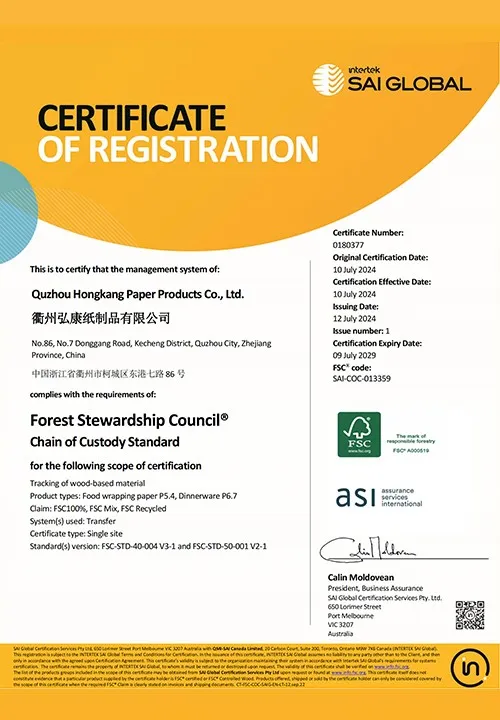
Our company has obtained ISO, SGS, FDA, SedEX, BRC, FSC, QS and other certificates.


Frequently Asked Questions
Q: What is a tureen?
Q: Is it bad to put hot soup into plastic containers?
Q: Is it safe to microwave plastic containers?
The container should be labeled “microwave-safe” – if it’s not, don’t use it.
Avoid microwaving food in plastic containers with dark colors, as this can cause the release of harmful chemicals.
Never microwave plastic containers that are empty – this can cause them to catch fire.
Always follow the manufacturer's instructions when microwaving food in plastic containers.
Q: Can I store food in plastic containers and freeze it?
Otherwise, the food can spoil or become contaminated. Once the containers are clean and dry, you can then add your food and seal the containers tightly.
Then, you can place the containers in the freezer, where the food will stay fresh for months. Just be sure to label the containers so you know what's inside them.
Q: What is the best alternative to plastic containers?
Q: When should I use paper bags for food?
Q: How to use plastic food storage containers?
Know the code. On the bottom of plastic food storage containers, you'll find a tiny triangle with a number (resin identification code) ranging from 1 to 7. This number indicates what the plastic is made of. In general, the safest choices for food use are numbers 1, 2, 4 and 5. The American Academy of Pediatrics recommends avoiding plastic containers with codes 3, 6 and 7. Plastic number 3 contains vinyl or polyvinyl chloride (PVC), 6 has polystyrene and 7 can contain various plastics, such as Bisphenol A (BPA).
The use of BPA has been banned in baby bottles, sippy cups and in the packaging of infant formulas. However, its use in other food and beverage containers continues to be monitored and is currently considered safe by the U.S. Food and Drug Administration. Many BPA-free plastic food and beverage containers are available today, allowing consumers to minimize their exposure to it.
Keep it cool. Though polycarbonate plastic is strong and long-lasting, it can break down over time from high temperatures and overuse. Never microwave foods in plastic food containers, including margarine tubs and restaurant carryout containers. Plastic containers from packaged microwavable meals shouldn't be reused after their initial use; they're safely designed for one-time-use only. Putting plastic containers in the dishwasher should also be avoided.
Recycle as appropriate. According to the Environmental Protection Agency (EPA), the U.S. recycled just over 8% of plastic containers and packaging in 2017. This can contribute to greenhouse gas (GHG) emissions, impacting the health of the environment.
Q: What is a soup container?
Q: What container can you put soup in?
Q: Are plastic soup containers safe?
Q: What is a soup carton?
Q: Can you reuse soup containers?
Q: How long does soup last in a container?
Q: Can plastic containers hold hot soup?
Q: Why is plastic soup a problem?
Q: How do you store soup without plastic?
Q: Are plastic soup containers recyclable?
Q: What is a soup bowl holder?
Q: Can you store soup in stainless steel?
Q: What are the uses of food storage containers?
We're well-known as one of the leading soup container manufacturers in China. Please feel free to wholesale customized soup container at competitive price from our factory. For pricelist and free sample, contact us now.
Paper Bowl, Disposable Ice Cream Paper Bowl, Kraft Paper Box